
 한국어
 ENG
 中文
 にほんご
Restorative Treatment
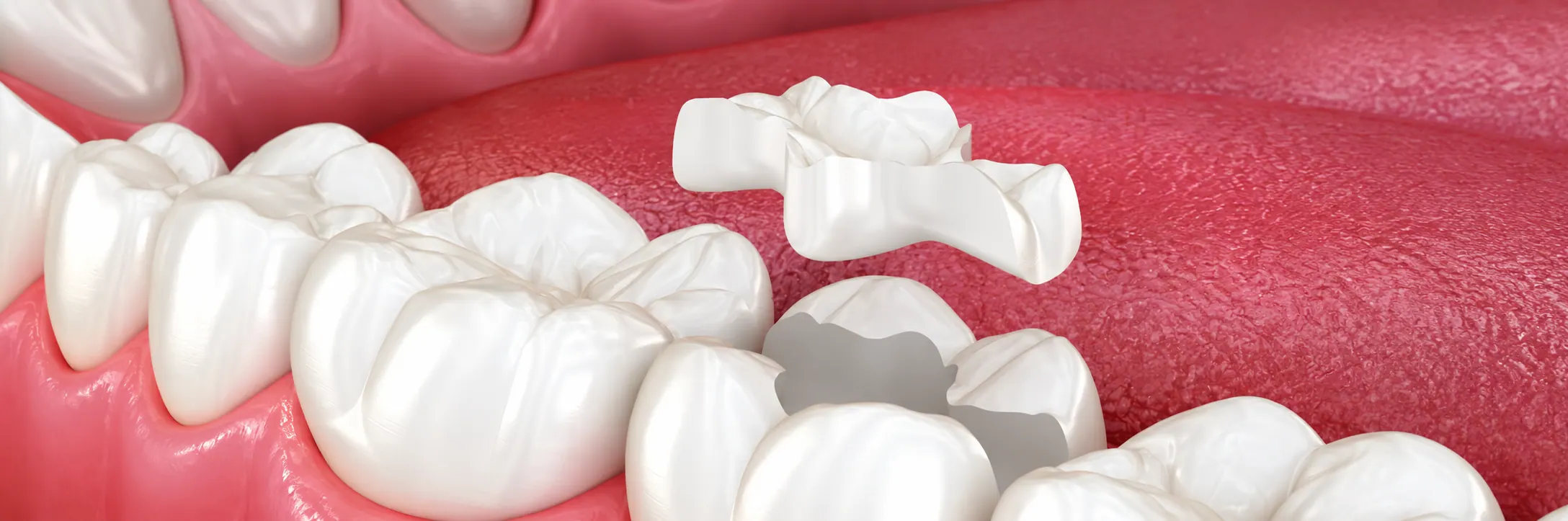
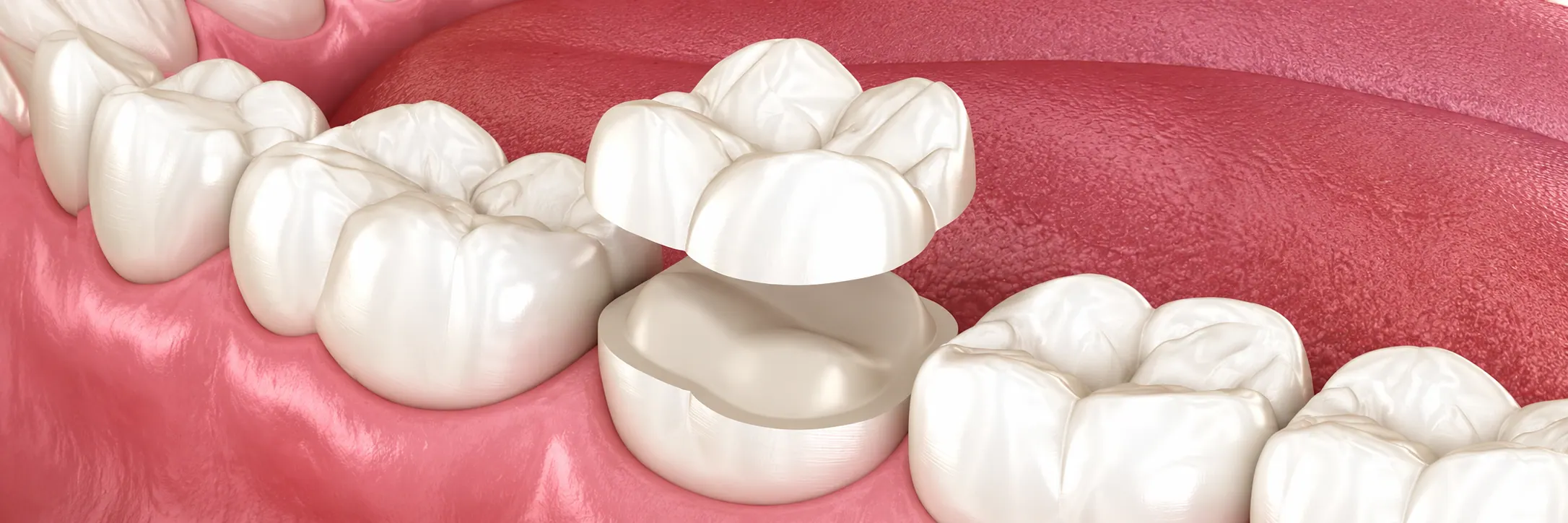
Inlay
Made to match the color of natural teeth, inlays are well suited to treating large cavities in visible areas.
The decayed part is removed, an impression of the remaining tooth is used to make a restoration, and it is bonded in place to restore the tooth’s function and shape.
Treatment matched to each stage of tooth decay
Stage 1 Enamel decay
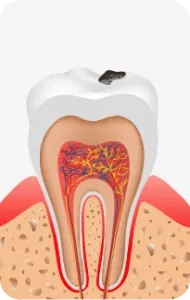
Decay has formed only in the enamel, the outermost layer of the tooth. There is little pain or sensitivity, and from the outside it looks like a black line or dot.
TreatmentRegular checkups, Resin
Stage 2 Dentin decay
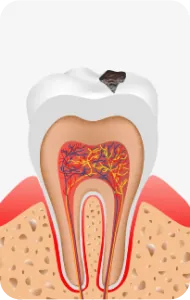
Decay has reached the dentin beneath the enamel. It comes with bad breath, hot and cold foods cause sensitivity, and the decay progresses faster.
TreatmentResin, Inlay
Stage 3 Pulp (nerve) inflammation
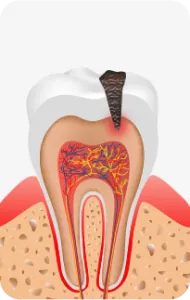
Decay has reached the nerve tissue inside the tooth. The pain is severe and gets worse with cold foods.
TreatmentRoot canal, Crown, Resin
Stage 4 Pulp (nerve) necrosis
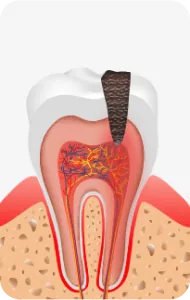
Inflammation has spread along the nerve tissue to the root, damaging it. An abscess or loosening may appear around the root.
TreatmentExtraction, Implant
Inlay materials by condition and extent of damage
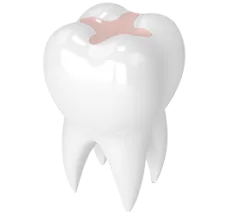 Ceramic (porcelain)
Similar in color to natural teeth.
Stronger and more durable than resin. However, its lower strength and hardness make it weaker than a gold inlay, and the opposing teeth may wear down or chip.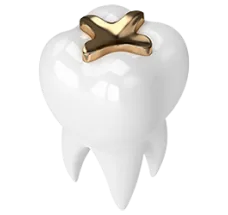 Gold inlay
With excellent strength, hardness and elasticity, it is used on molars that need strong chewing force or on areas with wide grooves.
However, it differs from tooth color, so it is relatively less aesthetic.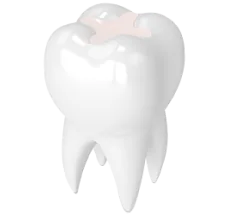 Zirconia
This metal-free ceramic is the most strengthened of the prosthetic materials available today.
It is strong enough that it rarely breaks even when stepped on, and its color closely resembles natural teeth for excellent aesthetics.
Crown
Used only for teeth whose decay covers a wider area than an inlay can treat.
It may be combined with root canal treatment, and the whole tooth is covered with a crown.
Treatment matched to each stage of tooth decay
Stage 1 Enamel decay
Decay has formed only in the enamel, the outermost layer of the tooth. There is little pain or sensitivity, and from the outside it looks like a black line or dot.
TreatmentRegular checkups, Resin
Stage 2 Dentin decay
Decay has reached the dentin beneath the enamel. It comes with bad breath, hot and cold foods cause sensitivity, and the decay progresses faster.
TreatmentResin, Inlay
Stage 3 Pulp (nerve) inflammation
Decay has reached the nerve tissue inside the tooth. The pain is severe and gets worse with cold foods.
TreatmentRoot canal, Crown, Resin
Stage 4 Pulp (nerve) necrosis
Inflammation has spread along the nerve tissue to the root, damaging it. An abscess or loosening may appear around the root.
TreatmentExtraction, Implant
After a root canal,
always get a crown
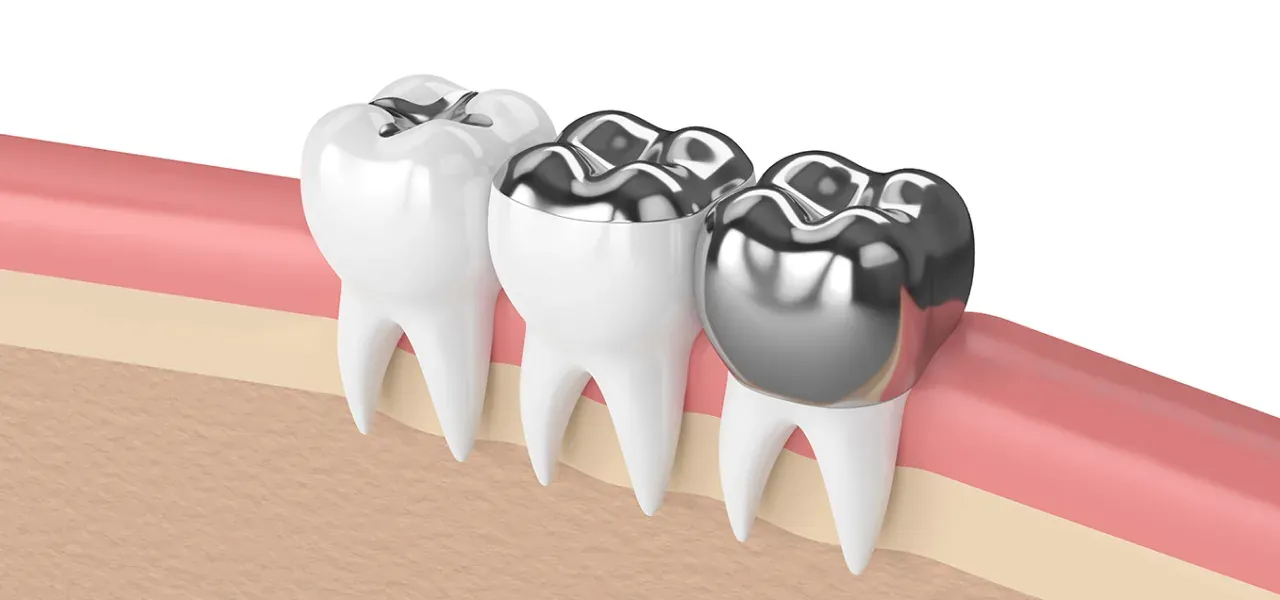
But once root canal treatment removes the infected pulp tissue inside, the tooth no longer receives enough nutrients and becomes brittle and weak, breaking easily even under light pressure.
So even if the pain has gone after a root canal, you must have a crown restoration to protect the nerve from bacterial infection and keep the remaining natural tooth from breaking.
Crown materials by condition and extent of damage
- Zirconia
This metal-free ceramic is the most strengthened of the prosthetic materials available today.
It is strong enough that it rarely breaks even when stepped on, and its color closely resembles natural teeth for excellent aesthetics. - Gold crown
With excellent strength, hardness and elasticity, it is used on molars that need strong chewing force or on areas with wide grooves.
However, it differs from tooth color, so it is relatively less aesthetic. - Ceramic (porcelain)
Similar in color to natural teeth.
Stronger and more durable than resin. However, its lower strength and hardness make it weaker than a gold inlay, and the opposing teeth may wear down or chip. 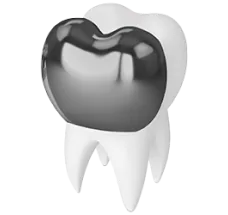 PFM (porcelain-fused-to-metal)
A restoration with a metal interior and a porcelain exterior.
It combines the strength of metal with the aesthetics of porcelain and bonds firmly, so it rarely comes off.
However, the outer surface can chip on impact, so it is mainly used only for front teeth or premolars.
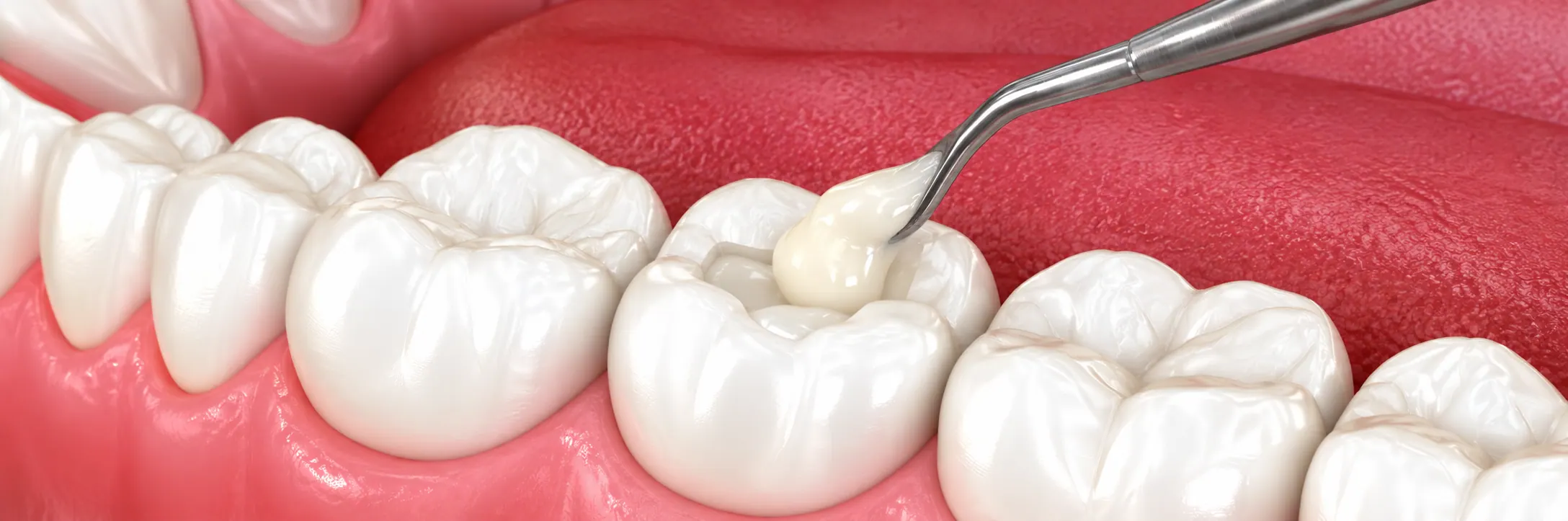
Resin Filling
Resin is a tooth-colored, aesthetic restoration that can be used when the decay is not extensive.
The decayed part is removed and filled with resin, and if the decayed area is small, treatment can be completed the same day.
Treatment matched to each stage of tooth decay
Stage 1 Enamel decay
Decay has formed only in the enamel, the outermost layer of the tooth. There is little pain or sensitivity, and from the outside it looks like a black line or dot.
TreatmentRegular checkups, Resin
Stage 2 Dentin decay
Decay has reached the dentin beneath the enamel. It comes with bad breath, hot and cold foods cause sensitivity, and the decay progresses faster.
TreatmentResin, Inlay
Stage 3 Pulp (nerve) inflammation
Decay has reached the nerve tissue inside the tooth. The pain is severe and gets worse with cold foods.
TreatmentRoot canal, Crown, Resin
Stage 4 Pulp (nerve) necrosis
Inflammation has spread along the nerve tissue to the root, damaging it. An abscess or loosening may appear around the root.
TreatmentExtraction, Implant
Frequently Asked Questions
Q. Where do cavities form?
A. Molars have deep, narrow grooves, so cavities form there most often.
Food debris often gets stuck between teeth and does not come out easily, which can lead to cavities.
If incorrect brushing wears a groove between the gums and teeth, cavities can form there.
Q. What causes cavities?
A. After eating, food debris and sugars remain between your teeth. Bacteria in the mouth use these sugars to produce acid, which erodes the teeth and causes cavities. That is why brushing after meals is so important.
Q. How can I prevent cavities?
A. In early childhood, regular fluoride applications and sealants help.
As an adult, brushing correctly is the basic way to prevent cavities.
It is also good to remove tartar with regular scaling and to check for cavities with regular checkups.
Q. Why is prosthetic treatment needed?
A. Prosthetic treatment protects natural teeth and improves their original function when teeth are lost or damaged by cavities, root canal treatment, gum disease or injury.
It prevents weaker chewing from damaged or missing teeth from impairing digestion and keeps speech from becoming unclear after losing front teeth, and it also prevents cavities that can form when food gets stuck between teeth after a tooth is lost.
In short, it improves not only chewing but also pronunciation and appearance.