




Bone Graft Implants
Bone Graft Implants
Bone Graft Implants
When the gum bone is too thin or insufficient to hold an implant securely, this surgery fills in bone graft material to rebuild solid gum bone before the implant is placed.
When bone is lacking in the upper (maxillary) molar area, it may be combined with a sinus lift, a technically demanding procedure that lifts the thin sinus membrane and grafts bone into the space beneath it.
Who is a good candidate for bone graft implants?
- 01
Those who lost a tooth a long time ago
- 02
Those whose bone is thin or low
- 03
Those who lost teeth to gum (periodontal) disease
- 04
Those having an implant placed right after an extraction
- 05
Those with naturally weak gum bone
- 06
Those who lost gum bone in an accident
Solid groundwork for a stable implant
Bone grafting is like the foundation work of implant surgery.
It builds the base that lets the implant settle in securely.
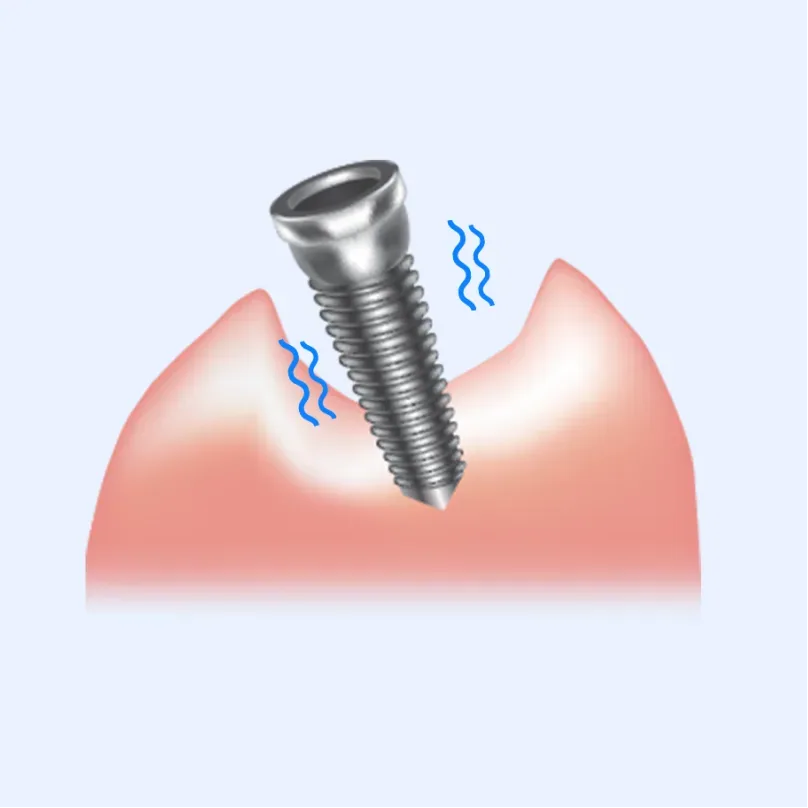
Insufficient alveolar bone: the implant cannot be secured
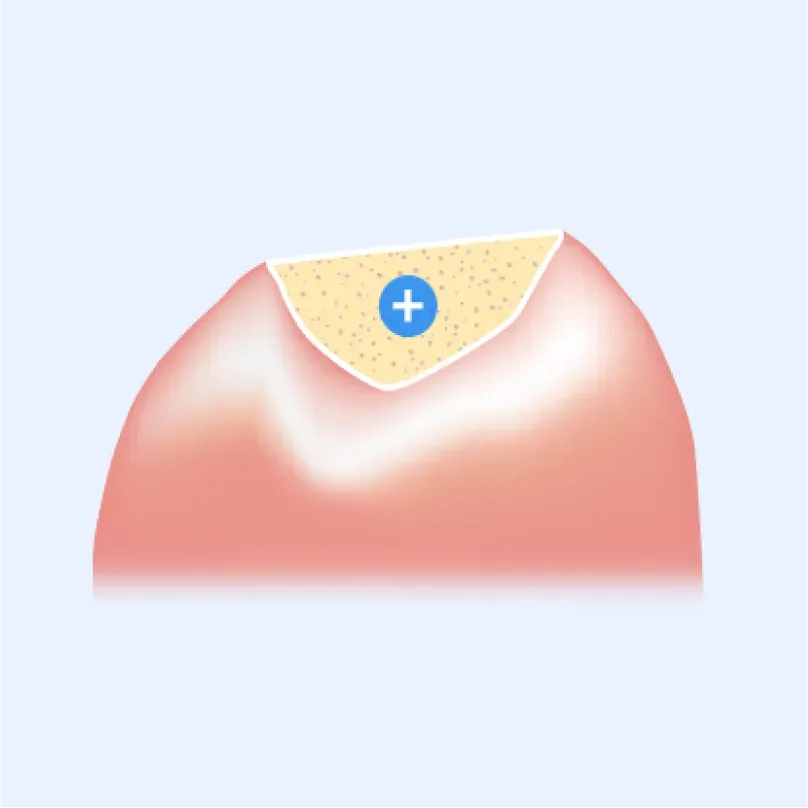
Gum bone graft
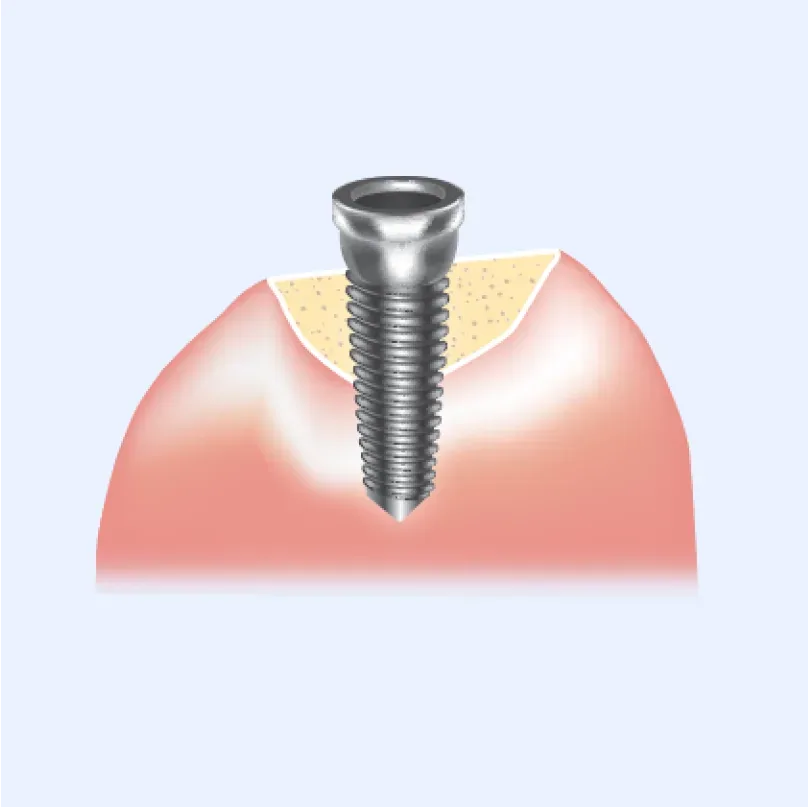
Implant placement
A procedure for stable upper molar implants:
the sinus lift
A sinus lift is used when there is not enough bone between the maxillary sinus (the hollow space inside the upper jawbone) and the gums to place an implant.
The space is gently lifted and filled with bone.
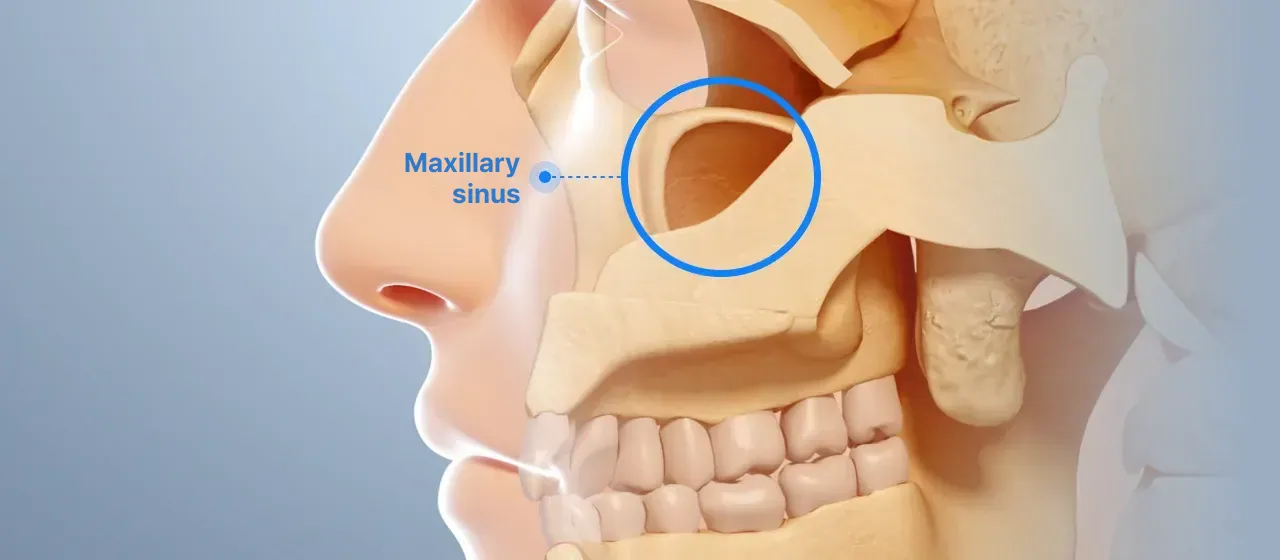
This is called sinus pneumatization, and as the sinus descends, the bone becomes too thin to place an implant.
When the bone has thinned like this, we perform a ‘sinus lift (sinus elevation)’, lifting the sinus upward and grafting bone.
Sinus lift case
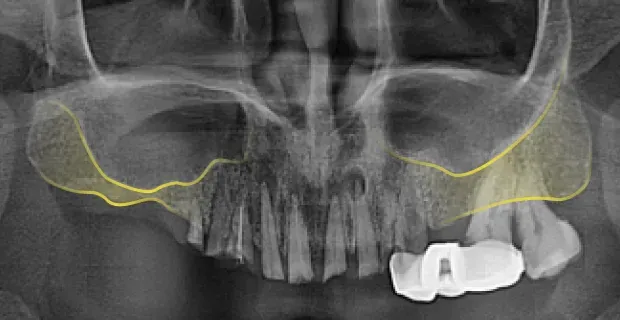
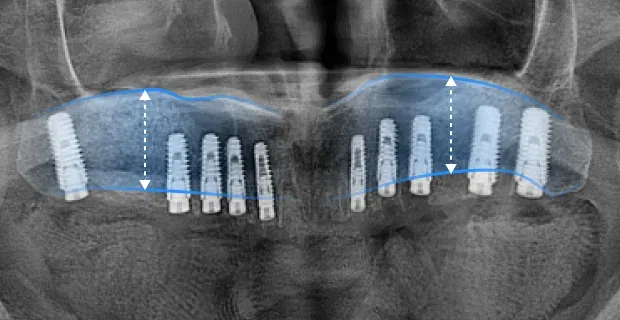
Yellow line: boundary between the gum bone and the sinus / Blue line: boundary between the gum bone and the sinus after the sinus lift
Treatment process
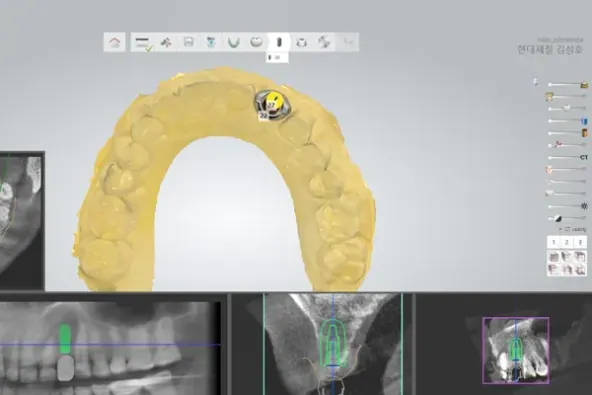 Digital diagnosis & computer simulation
We analyze your teeth precisely with 3D CT to check their condition, then run a computer simulation based on this data and plan treatment through a virtual implant surgery.
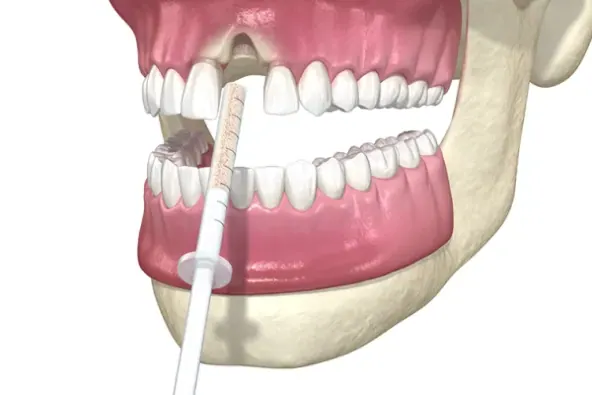 Bone graft surgery
To make up for missing gum bone, we graft bone using a material suited to the patient, such as autogenous or synthetic bone.
After grafting, the gum bone and graft material need at least 4 to 6 months to fuse.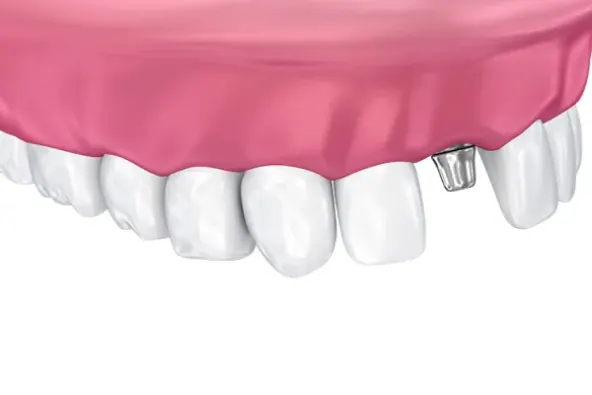 Implant root placement
Once we confirm the gum bone has fully fused and settled, the implant’s artificial root is placed.
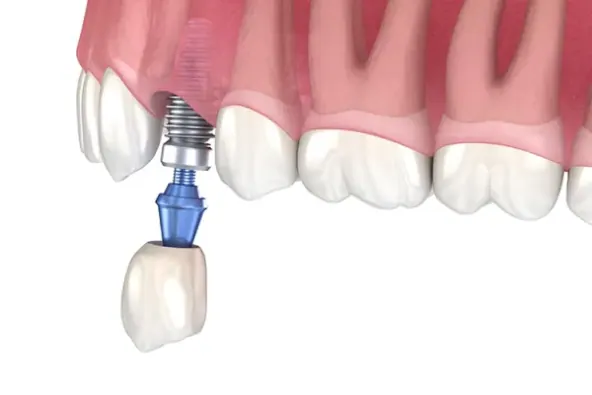 Prosthesis attached, surgery complete
After the artificial root is firmly anchored, a prosthesis custom-made for the patient is attached on top to complete the surgery.
Highly stable bone graft materials
suited to each patient
- Autogenous tooth bone
Your extracted tooth, processed in our clinic
- Autogenous bone
The patient’s own bone
- Allograft
Graft material processed from human donor bone
- Xenograft
Animal bone (mostly bovine)
- Synthetic bone
Bone made by artificial synthesis
Frequently Asked Questions
Q. Can I get implants even if I have no teeth at all?
A. Implants are entirely possible even when no teeth remain, that is, in an edentulous mouth. The approach, however, differs from a regular implant. The key to full-arch implants is that they are not “a treatment that places one tooth” but “a treatment that redesigns the entire structure.”
When all teeth are missing, the goal is not simply to place many implants. What matters is how efficiently the biting force is distributed and how stable a structure can be built. That is why overall planning, from the number and position of implants to the prosthetic structure, is so important for full-arch implants.
Q. Is a bone graft really necessary?
A. To prevent problems that a lack of alveolar bone can cause, such as damage to the implant or loss of the tooth’s natural function, areas where the gum bone is insufficient need to be filled with graft material that has the same properties as human bone.
Bone graft material not only fills in missing bone during implant treatment but also plays an important role in inducing new bone formation, so it is a procedure that helps you use healthy teeth for a long time.
Q. Are bone graft implants more painful?
A. Everyone feels pain differently, but because the procedure is done under anesthesia, you will feel very little. Some pain may continue after the anesthesia wears off, but taking the prescribed medication as directed and applying ice packs can reduce swelling and pain.
If you follow the aftercare instructions we give you, there is no need to worry.
Q. Why is a sinus lift needed for implants?
A. A sinus lift is performed when there is not enough gum bone height to place an implant in the upper molar area.
It carefully lifts the floor of the maxillary sinus to secure bone space that can support the implant, with the aim of placing the implant more stably.
Whether you need a sinus lift is decided after checking the gum bone height and sinus position on a CT scan; it is not performed on every implant patient.
Q. Can patients with high blood pressure get implants?
A. As long as blood pressure is well controlled, it is possible at most dental clinics without difficulty.
Before treatment, however, it is important to discuss your current medications and overall health thoroughly with the dentist and plan accordingly.
Operating while blood pressure is high can increase bleeding and the strain on the cardiovascular system. If you check that the clinic can monitor blood pressure in real time before and during implant surgery and has a system for collaborative care with other specialists, patients with high blood pressure can also receive implant treatment safely.