




Implants for Diabetic Patients
Implants for Diabetic Patients
Implants for diabetic patients,
designed to ease the burden
Diabetic patients heal more slowly and are more vulnerable to bacterial infection, so routine dental care, let alone implant surgery that requires a gum incision, tends to be difficult.
Inflammation and bleeding can be heavy during the procedure, and problems such as the placed artificial root coming loose can occur afterward.
At Plan Dental, detailed diagnostic equipment such as 3D CT and intraoral scanners, together with a care program for diabetic patients built by our experienced dentists, lets you receive implant treatment tailored to you.
Why dental care is harder for patients with diabetes or systemic conditions
Reduced white blood cell function makes gum disease likely to recur.
The risk of excessive bleeding during dental treatment is very high.
There is a risk of shock from low blood pressure or high blood sugar.
Treated areas heal more slowly.
They are highly vulnerable to bacterial infection during treatment.
Stress and fatigue set in easily, making long treatment sessions difficult.
Implant guide for patients with diabetes or systemic conditions

For safe implant surgery, get plenty of sleep and watch your stress so your immunity does not drop.

For your safety, patients with diabetes or systemic conditions should tell the dentist about their medical history and medications before surgery.

Because of blood sugar control, immunity and stress, we recommend having surgery in the morning when possible.
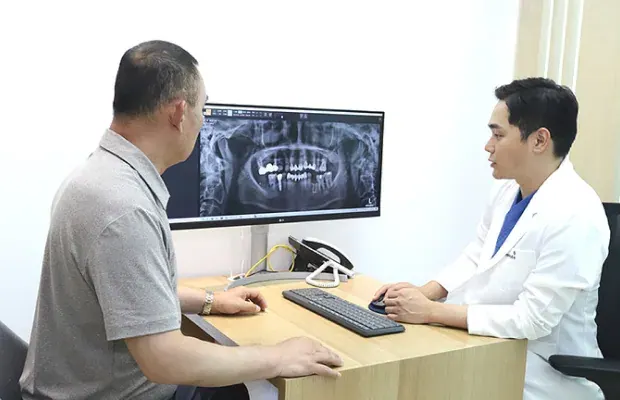
Implant patients with diabetes should have a dental checkup every 2 to 3 months to keep looking after their oral health.
Frequently Asked Questions
Q. Can I get implants even if I have no teeth at all?
A. Implants are entirely possible even when no teeth remain, that is, in an edentulous mouth. The approach, however, differs from a regular implant. The key to full-arch implants is that they are not “a treatment that places one tooth” but “a treatment that redesigns the entire structure.”
When all teeth are missing, the goal is not simply to place many implants. What matters is how efficiently the biting force is distributed and how stable a structure can be built. That is why overall planning, from the number and position of implants to the prosthetic structure, is so important for full-arch implants.
Q. Is a bone graft really necessary?
A. To prevent problems that a lack of alveolar bone can cause, such as damage to the implant or loss of the tooth’s natural function, areas where the gum bone is insufficient need to be filled with graft material that has the same properties as human bone.
Bone graft material not only fills in missing bone during implant treatment but also plays an important role in inducing new bone formation, so it is a procedure that helps you use healthy teeth for a long time.
Q. Are bone graft implants more painful?
A. Everyone feels pain differently, but because the procedure is done under anesthesia, you will feel very little. Some pain may continue after the anesthesia wears off, but taking the prescribed medication as directed and applying ice packs can reduce swelling and pain.
If you follow the aftercare instructions we give you, there is no need to worry.
Q. Why is a sinus lift needed for implants?
A. A sinus lift is performed when there is not enough gum bone height to place an implant in the upper molar area.
It carefully lifts the floor of the maxillary sinus to secure bone space that can support the implant, with the aim of placing the implant more stably.
Whether you need a sinus lift is decided after checking the gum bone height and sinus position on a CT scan; it is not performed on every implant patient.
Q. Can patients with high blood pressure get implants?
A. As long as blood pressure is well controlled, it is possible at most dental clinics without difficulty.
Before treatment, however, it is important to discuss your current medications and overall health thoroughly with the dentist and plan accordingly.
Operating while blood pressure is high can increase bleeding and the strain on the cardiovascular system. If you check that the clinic can monitor blood pressure in real time before and during implant surgery and has a system for collaborative care with other specialists, patients with high blood pressure can also receive implant treatment safely.